

Experts at the New Jersey Poison Control Center offer crucial tips to avoid being exposed to this dangerous gas
As families gather for the holidays, experts at the New Jersey Poison Control Center remind everyone that carbon monoxide (CO) poisoning is a serious, life-threatening hazard that can strike without warning.
Known as “the silent killer,” carbon monoxide is colorless, odorless, and deadly. From infants to older adults, no one is safe from its effects, which range from flu-like symptoms to death.
So far during this year’s holiday season, the poison center assisted in the medical care of 58 people – including children – who were exposed to carbon monoxide. These cases highlight the ongoing risk of CO exposure during winter months when families rely on portable generators, heaters, and other fuel-burning devices.
“These numbers remind us that carbon monoxide poisoning is not rare—it’s a real and present danger in every home,” said Diane Calello, executive and medical director of the New Jersey Poison Control Center at Rutgers New Jersey Medical School. “Prevention is simple: install detectors, check batteries, and never use gas-powered equipment indoors.”
To help you stay safe from exposure to carbon monoxide, the New Jersey Poison Control Center is sharing its 12 dangers of carbon monoxide—critical tips to prevent illness.
- Everyone is at risk: Anyone from babies to older adults can be poisoned by carbon monoxide.
- Symptoms can be difficult to recognize: They often resemble common illnesses such as the flu or COVID-19
- You can’t see it: CO is colorless.
- You can’t smell it: CO is odorless.
- It gives no warning: That’s why it’s called the silent killer.
- Vacation rentals are a risk: Bring a portable carbon monoxide detector; not all vacation rentals have working detectors.
- Detectors save lives: Install carbon monoxide alarms on every level (including basements) and outside each separate sleeping area, ideally. Have at least one detector at home.
- Dead batteries don’t save lives: Test and replace batteries (if needed) twice a year when changing clocks for Daylight Saving Time.
- Beware of clocked vent pipes: Keep vents clear for safe airflow, especially with high snow accumulations.
- Check for clogged chimneys: They should be professionally inspected and cleaned before use each winter.
- Don’t misuse portable heaters: Follow instructions carefully. Only use space heaters that are designed for indoor use.
- Generators must stay outdoors: Never under any circumstance should generators or other gas-powered equipment be used indoors. Keep generators at least 20 feet away from homes with their exhausts facing away.
Why is this important? Carbon monoxide poisoning sends hundreds of New Jersey residents to emergency departments every year for accidental carbon monoxide poisoning. Symptoms include headache, dizziness, nausea, chest pain and confusion. At high levels, carbon monoxide exposure can cause unconsciousness and death. If symptoms improve outdoors, carbon monoxide may be lurking inside your home.
Early signs of carbon monoxide poisoning can easily be mistaken for the flu or even COVID-19, making it critical to consider carbon monoxide exposure when symptoms improve outdoors.
“People often think they’ll smell or see danger, but CO gives no warning,” said Bruce Ruck, managing director of the New Jersey Poison Control Center. “If your alarm sounds, don’t ignore it. Get outside immediately and call for help. That alarm could save your life.”
If your carbon monoxide alarm sounds or you suspect poisoning:
- Get everyone, including pets, outside to the fresh air immediately.
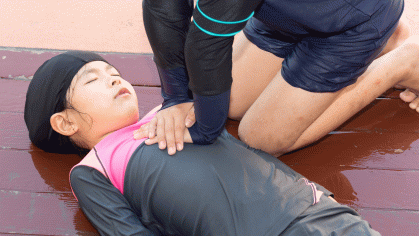
- If the person is unconscious or difficult to wake, call 911.
- Contact the New Jersey Poison Control Center at 1-800-222-1222 for fast, personalized medical guidance and care, 24/7.
If you have questions about carbon monoxide or think someone was exposed to it, contact the New Jersey Poison Control Center immediately for medical treatment advice. Anyone can call for medical help – children, teens and adults.