Neuroscience Students Awarded Travel Grants to Present Research at National and Global Conferences
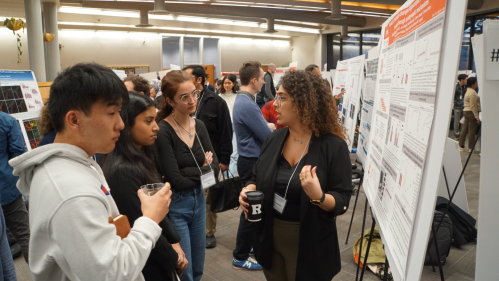
The Rutgers Brain Health Institute provides early career researchers with an opportunity to connect with peers and leading scientists
The Rutgers Brain Health Institute announced the recipients of the Fall 2026 Trainee Travel Awards, which recognize outstanding Rutgers neuroscience doctoral degree students, those pursuing both a medical degree and a research doctorate and postdoctoral fellows.
Each awardee receives $500 to help offset the cost of attending a national or international neuroscience or mental health conference.
These awards give early career researchers the opportunity to connect with peers and leading scientists, strengthen their professional development, contribute to advancing impactful neuroscience research, and raise the visibility of Rutgers neuroscience and mental health research on a global stage.
Over the past five years, the institute has awarded approximately $40,000 to 80 trainees working with 56 different principal investigators from 20 departments across nine schools at Rutgers.
Awards are given across BHI’s four focus areas: neurodegeneration and injury, neurodevelopment, motivational and affective neuroscience, and cognitive and sensory neuroscience.
The Fall 2026 Trainee Travel Awards recipients are:
- Marco Chia-Ho Lai
- Rumi Oyama
- Jorge Luis Islas
- Paula Diaz Munoz
- Yan Tong
- Nirmal Kumar
- Ava Papetti
- Manasi Agrawal
- Jose F Cevallos
- Kuldeep Shrivastava
- James Muldowney
Nirmal Kumar, a postdoctoral fellow in Pingyue Pan’s lab presented his work at the Grand Challenges in Parkinson’s Disease 2026 conference in Grand Rapids, Mich. “I presented my research on how restoring cellular trafficking pathways may improve dopamine signaling and motor function in Parkinson’s disease models,” Kumar said. “It was a great opportunity to share my findings, learn from other researchers, and get new ideas for my ongoing work. I appreciate BHI’s support and look forward to presenting my research at the 2026 BHI Annual Symposium on Dec. 2.”