

Rutgers-Led Center Spots Emerging Tobacco Threats Years Faster Than Conventional Surveillance
JUUL, a popular e-cigarette brand in the U.S., began gaining traction among American teenagers in 2017, leading their use of electronic cigarettes to surge in 2018, but the brand didn’t appear by name on the National Youth Tobacco Survey until 2019.
The delay in identifying JUUL as the market catalyst kept regulators from getting ahead of the problem and led them to fund a new monitoring system designed to detect emerging tobacco threats in real time, the Rutgers University-led Center for Rapid Surveillance of Tobacco, referred to as CRST.
“Large federal surveys are like an aircraft carrier in the ocean. They’re extremely powerful in many ways, but they can’t pivot quickly,” said Cristine Delnevo, director of the Rutgers Institute for Nicotine and Tobacco Studies and the center’s principal investigator.
A special issue of Preventive Medicine Reports, which contains 13 peer-reviewed papers, illustrates how the center’s continual tracking and cross-referencing of different data types provides novel and timely insight into emerging trends in nicotine product creation, distribution, marketing and uptake.
The center’s researchers monitor marketing for more than 50 tobacco and nicotine brands across print, online and social media. They audit store shelves twice a year at roughly 60 retailers in each of six sentinel states (California, Kentucky, New Jersey, North Carolina, Ohio and Vermont). They also analyze national retail sales data, survey youth, young adults and adults quarterly and code photographs of products collected from youth in U.S. schools. Then, they connect all the dots across those disparate data streams to get the fullest possible picture of emerging trends.
The approach already has produced results. In 2024, the center flagged Geek Bar, a disposable e-cigarette not authorized for sale by the Food and Drug Administration (FDA), as a brand to watch. Sales were climbing fast, marketing targeted young people, and new flavors appeared constantly. Further analysis led the CRST to predict, correctly, that Geek Bar would overtake JUUL in sales by October 2025.
The CRST’s survey data show Geek Bar is now the top brand among young people who vape, named by about half of youth and young adult users, and the FDA has since issued warning letters and taken enforcement actions against retailers selling the brand.
“The Geek Bar signal analysis highlights how the parts all work together, and to date, we think it is one of the most impactful pieces of work we’ve pulled together,” Delnevo said.
Other findings in the special issue underscore how quickly the marketplace moves. A study of nearly 9,600 nicotine products collected or confiscated from youth in U.S. schools found that 99% were e-cigarettes, that more than 99% of identifiable flavors were nontobacco flavors and that this product use school-based data collection system captured 404 distinct brands. In the center’s six-state cohort survey of youth and young adults, 63% of participants under age 21 said tobacco or nicotine products were easy to get.
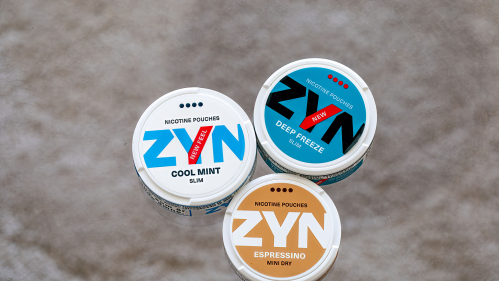
The center’s monitoring has also tracked the rise of nicotine pouches, one of the few rising categories of tobacco products in the United States. Researchers noted that Zyn had overtaken the brands that had long held 80% of the oral tobacco market, Grizzly, Copenhagen and Skoal, long before most people had ever heard of Zyn. When the FDA recently authorized Zyn to be marketed as posing a lower risk than cigarettes, the center’s analysis of numerous surveys supplied crucial context: Pouch users are overwhelmingly adults with a history of using more dangerous products, such as cigarettes, rather than teens starting to use nicotine for the first time.
“Who is using the products is a very important piece of the puzzle,” said Delnevo, adding that the calculation would change if pouch marketing translated into new, younger users.
“Nicotine pouches are a really competitive marketplace, and we’ve documented these products from marketing to marketplace to use patterns,” said Ollie Ganz, an assistant professor at the Rutgers School of Public Health who leads the center’s marketing surveillance.
All papers in the special issue are open access and available now. The center, which is in the fourth year of its five-year contract with the FDA and the National Cancer Institute (NCI), publishes regularly updated fact sheets on emerging brands on its website.